When you live or work near the Rhine, decisions made at the intercommunal level affect daily life much more than one might imagine. Waste collection, maintenance of bike paths, flood management, welcoming businesses: all of this falls under a community of municipalities. Those bordering the river also have a geographical particularity, the border, which opens up funding and cooperation opportunities that are inaccessible to landlocked territories.
Cross-border cooperation along the Rhine: a concrete lever for residents
You may have noticed those bike paths that cross the border without a break in the surface? It’s not a coincidence. The Rhine communities rely on programs like INTERREG Upper Rhine to co-finance shared infrastructure with their German or Swiss neighbors.
In practical terms, this translates into nautical stops accessible from both sides of the river, ecological continuities on former gravel pits, or coordinated transport links between French and German local authorities. The territorial development plan of the Eurodistrict PAMINA, for example, conditions access to these European funds.
For an intermunicipality on the banks of the Rhine, the cross-border dimension now structures most development projects. All information about the services offered to residents and businesses in such a territory can be found at https://www.cc-rhin.fr/, which details the competencies exercised and the procedures accessible online.
Flood prevention and Rhine urban planning: constraints turned into an asset
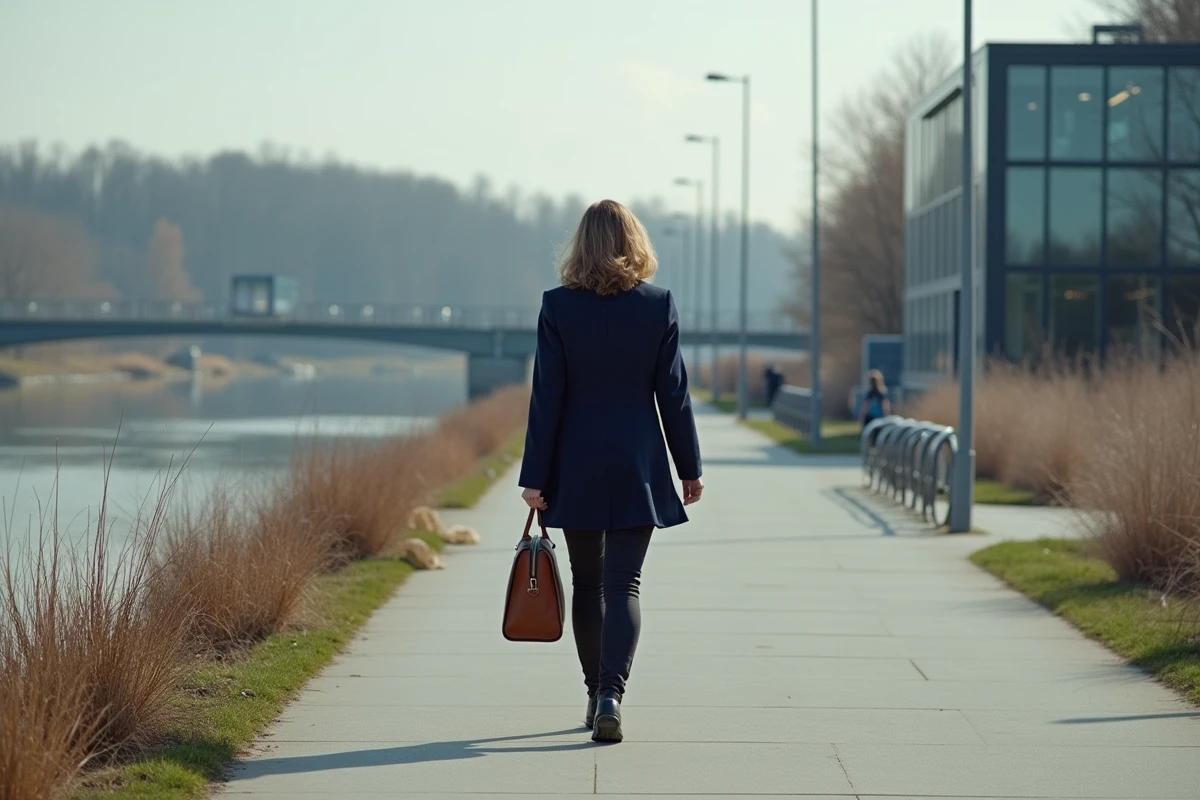
The Rhine is not just a landscape asset. It is also a major risk. Since the revision of the Flood Risk Management Plans (PGRI) 2022-2027 for the Rhine-Meuse basin, the urbanization rules along the river have tightened.
What the PGRI changes for member municipalities
Communities of municipalities must integrate flood prevention directly into their urban planning documents (PLUi, SCoT). In practice, this means that certain areas are no longer buildable and that others are reserved for flood expansion.
Far from being a hindrance, this constraint encourages intermunicipalities to value their natural spaces differently. The renaturation of dead arms of the Rhine, for example, creates ecological corridors that attract nature tourism and improve water quality.
- Restoration of wetlands and former river arms to absorb floods upstream of inhabited areas
- Integration of the GEMAPI (management of aquatic environments and flood prevention) competence into the intermunicipal budget
- Stricter constraints on building permits in flood-prone areas, with longer processing times
The GEMAPI transforms risk management into a territorial project. Dikes are no longer just maintained: they are part of a global plan that combines safety, biodiversity, and quality of life.
Economic development along the Rhine: beyond traditional business zones
The pages of competing communities of municipalities often present economic development from the perspective of business zones and business parks. This is a starting point, but Rhine territories have an additional asset: the immediate proximity of cross-border employment basins.
River tourism and enhancement of Rhine heritage
The Rhine generates a specific tourism economy. Nautical stops, cycling routes along the river (EuroVelo 15), and pedestrian walkways connecting France to Germany or Switzerland attract visitors who come not for a single municipality, but for a territory.
A dynamic community of municipalities coordinates this offering. It ensures tourism promotion, finances the maintenance of facilities, and negotiates with partners on the other bank. Rhine river tourism relies on intermunicipal and cross-border cooperation.
Support for businesses and access to networks
Are you looking to establish a business in a Rhine territory? The economic development service of an intermunicipality acts as the first point of contact. It connects project leaders with institutional funders and local networks.
- Direct management of business premises and incubators at affordable rents
- Support in administrative procedures related to establishment in border areas
- Networking with economic actors on both sides of the Rhine
- Promotion of the territory to investors through dedicated tools (brochures, films, trade shows)
Quality of life and daily services: what makes a Rhine territory attractive
Beyond technical competencies, it is the quality of daily services that retains residents. Early childhood, waste collection, access to high-speed internet: these topics all fall under the intermunicipal level.
Rhine communities also invest in soft mobility. The flat terrain along the river is particularly suited to bike paths, and cross-border funding allows for the extension of these routes well beyond French administrative boundaries.
Housing policy is another structuring axis. Intermunicipalities conduct housing improvement operations (OPAH), sometimes manage social or emergency housing, and ensure a balance between new construction and the preservation of agricultural land, a particularly sensitive issue in the Rhine plain.
An attractive territory combines local public services and a strategic vision at the scale of the Rhine basin. The intermunicipalities that succeed are those that articulate these two dimensions without sacrificing one for the other. The Rhine, far from being a simple geographical boundary, acts as a catalyst for shared projects between municipalities, between countries, between residents.