Since 2012, European regulations have mandated the automatic activation of daytime running lights on all new vehicles. However, some models like the Renault Clio 4 allow this function to be disabled, which can lead to confusion or misuse.
The settings, often overlooked, are found in the user manual or the onboard computer. Between each version of the Clio 4, some subtleties remain, depending on the trim or production year. Following the steps precisely helps avoid mistakes and drive without fearing a fault during a check.
What are the daytime running lights on the Renault Clio 4 for and why are they essential in daily life?
The Renault Clio IV is equipped with LED daytime running lights, standard on most trims since the European reform of 2012. Their role: to enhance the visibility of the vehicle as soon as the engine is running, without driver intervention. This automatic lighting system, distinct from position lights, does not replace mandatory night lighting, but it significantly reduces the risk of accidents during the day. Statistics published by road safety authorities confirm the decrease in frontal and side collisions with the widespread adoption of these devices.
The specificity of the daytime running lights on the Clio IV lies in their electronic management. As soon as a headlight bulb is turned on, whether low beam or high beam, the daytime running lights turn off, except on the GT and RS versions where they remain active. A technical adaptation exists: the dimmer box allows the daytime running lights to stay on simultaneously with the other lights, provided that the light intensity is reduced to 50% at night to comply with French legislation.
The benefit is immediate: the Clio 4 gains visibility, especially when the light flickers, under a changing sky or at the entrance of a tunnel. Discussions on forums reflect the number of drivers questioning the operation of the lights and their synchronization with automatic systems. For those who wish to activate the daytime running lights on Clio 4, a page details the step-by-step procedure: Activating automatic lights on Clio 4: step-by-step procedure – Moto Sites.
A quick regulatory reminder: these LED lights do not replace approved sidelights and do not exempt from turning on low beams as soon as night falls. Their discretion hides a real effectiveness, both for daytime running light safety in the city center and in the suburbs.
Activating daytime running lights step by step: practical guide for all Clio IV drivers
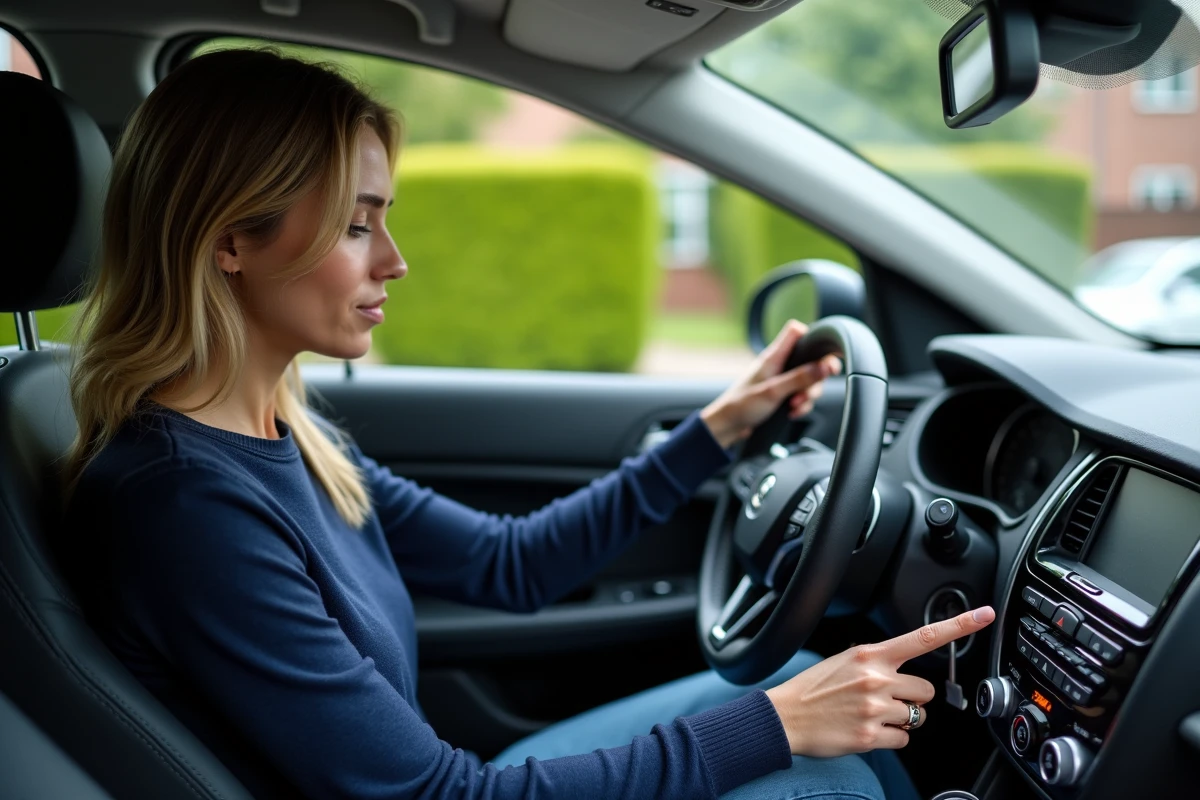
The process varies depending on the release year and version of your Renault Clio IV. On recent models, the control is accessible directly via the dashboard menu or through the R-Link interface. On others, it all depends on the lever to the left of the steering wheel.
Classic procedure for activation from the dashboard:
Here’s how to proceed to activate the daytime running lights from the onboard computer:
- Turn on the ignition without starting the engine.
- Use the steering wheel controls to navigate through the dashboard menu (generally, the “+” and “-” buttons on the right branch).
- In the Vehicle Settings section, go to Lighting.
- Then select Daytime Running Lights and confirm the activation.
- A message will appear to notify you: “Daytime running lights activated”.
For versions equipped with the auto position on the lever, keep this setting selected. The daytime running lights will then activate automatically as soon as the engine is running, unless a headlight (low beam or high beam) is already on. On the GT and RS versions, the electronic management keeps the daytime running lights on even when the other lights are active.
A quick check on the dashboard allows you to verify the activation thanks to a specific icon. This visual marker prevents any unpleasant surprises, especially during a technical inspection or in low light conditions. If you are unsure about the procedure, the Clio IV user manual details each option according to the year and trim of your model.
Differences between daytime running lights, low beams, and high beams: understanding lighting modes and their uses
On the Renault Clio IV, each type of light serves a specific purpose. The daytime running lights, equipped with LEDs, activate automatically when the engine starts to provide increased visibility without ever dazzling. They complement the low beams and high beams, but do not replace them. As soon as a main headlight takes over, the daytime running lights turn off, except on the GT and RS versions which keep this function active.
The distinction is not a technical detail. The low beams are used when light decreases: at dusk, in the rain, in fog, or in tunnels. They illuminate the road without disturbing other drivers. The high beams, on the other hand, project a wide and powerful beam, useful only when the road is clear, with no vehicle in front or coming towards.
To complete this lighting arsenal, other devices come into play:
- The front fog lights, optional but practical in bad weather.
- The rear fog light, mandatory, particularly useful in heavy rain or thick fog.
Abusive use of fog lights can result in a fixed fine of €135, without point loss. During the technical inspection, each light source must be operational and compliant with the highway code. Knowing how to handle these different lighting modes is not just a matter of comfort; it is also a question of safety and respect for other road users.
Mastering the activation of daytime running lights, understanding their role, and knowing how to juggle between different lighting modes means driving more calmly, in every season and situation. On the road, every detail counts; sometimes, turning on the right lights makes all the difference.