In cooking, recipes often specify measurements in volumes, such as cups or spoons. To achieve consistent and accurate results, it is sometimes necessary to convert these volumes into weights. A cup of flour does not weigh the same as a cup of sugar, and this variability can affect the final outcome.
This conversion requires a certain level of precision and a good understanding of the ingredients. For example, a cup of all-purpose flour weighs about 120 grams, while a cup of granulated sugar weighs about 200. Understanding these nuances helps improve the accuracy and success of recipes, especially in baking where every gram counts.
The Basics of Converting Volumes to Weights in Cooking
In cooking, converting volumes to weights is fundamental to ensure recipe accuracy. Liquid measurements, such as water or milk, are often expressed in milliliters or liters, while dry measurements, such as flour or sugar, are often indicated in grams or ounces. The conversion between these units requires an understanding of equivalences.
Liquid Measurements
- 1 tablespoon: 15 ml
- 1 teaspoon: 5 ml
- 1 cup: 240 ml
- 1 liter: 1000 ml
To convert 60 cl to grams, you need to know the density of the ingredient. For example, 60 cl of water equals 600 grams, as the density of water is 1 g/ml. In contrast, for oil, which has a lower density, 60 cl weighs about 552 grams.
Dry Measurements
Dry measurements, which are more complex, vary depending on the ingredient:
- 1 ounce: 28 g
- 1 pound: 454 g
- 1 kilogram: 1000 g
A cup of all-purpose flour weighs about 120 grams, while a cup of granulated sugar weighs about 200 grams. The accuracy of these measurements is essential for achieving consistent results.
Converting Volumes to Weights
In cooking, converting volumes to weights often involves using tools like a kitchen scale, measuring cup, and measuring spoon. These instruments allow for precise measurement of ingredients, thereby ensuring the success of recipes. 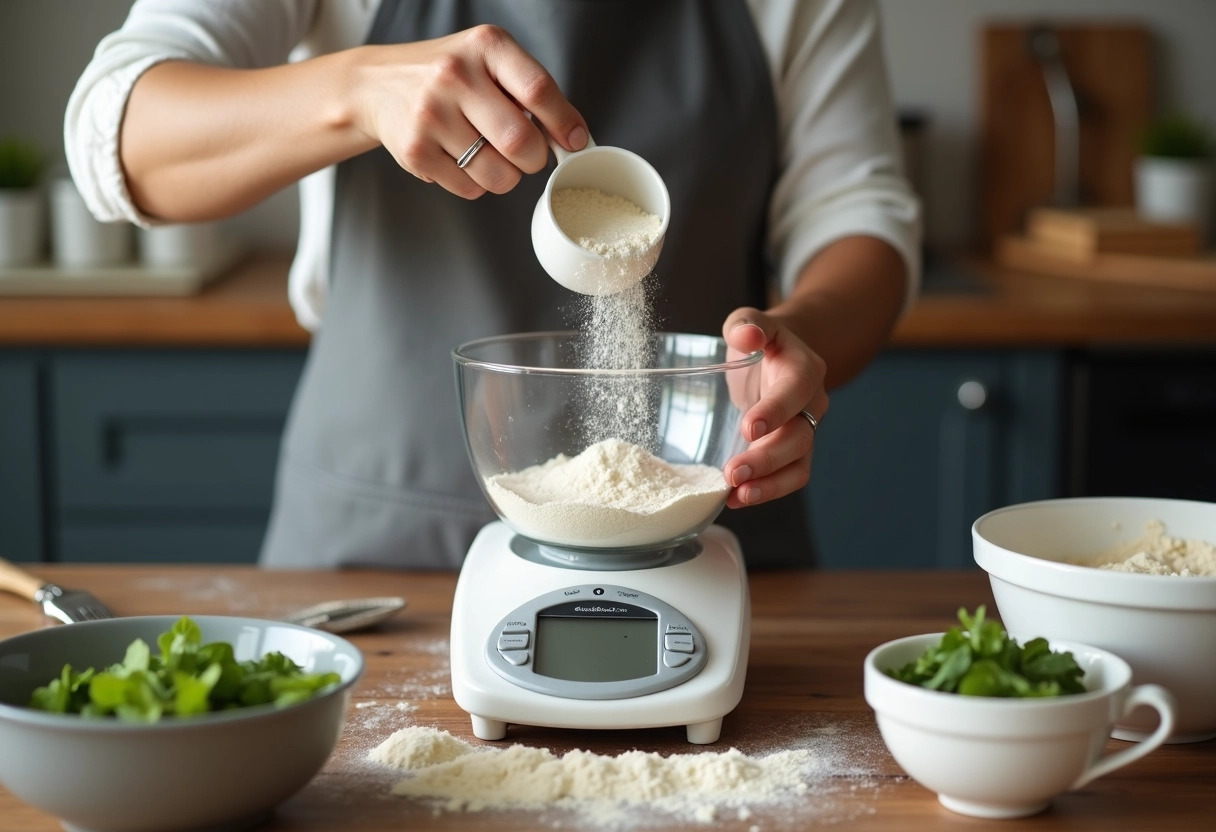
Techniques and Tips for Accurate Conversion Based on Ingredients
For chefs and kitchen staff, precision is fundamental. Use appropriate measuring instruments: kitchen scale, measuring cup, and measuring spoon. These tools help avoid approximations.
Liquid Measurements
For liquids like oil, milk, or sauces, use a measuring cup. The density of oil, for example, is lower than that of water. 1 liter of oil weighs about 900 grams.
Dry Measurements
Dry ingredients, such as flour, sugar, or spices, require a kitchen scale for accurate conversion. Here are some common equivalences:
- 1 cup of flour: 120 g
- 1 cup of sugar: 200 g
- 1 tablespoon of salt: 18 g
Practical Tips
When measuring ingredients, consider variations in density. For example, brown sugar is denser than white sugar. Taking these differences into account allows for precise and balanced recipes.
Modern kitchen scales offer tare functions, making it easier to measure multiple ingredients successively. Use this function to weigh ingredients efficiently without having to transfer them from one container to another.
In professional kitchens, using precise measurements is not only a matter of rigor but also of adhering to quality standards. Well-executed recipes depend on the accuracy of the measurements.